Best Travel Photography Books for Composition and Storytelling 2026
I bought my first copy of Michael Freeman’s The Photographer’s Eye in a dusty bookstore in London back in 2012. I was heading to Morocco the next morning. At the time, I thought I knew how to take a picture. I had the latest DSLR and a bag full of lenses that cost more than my car. But as I flipped through those pages on the flight to Marrakesh, I realized I was just a tourist with an expensive toy. The book didn’t talk about megapixels or sensor sizes. It talked about the frame. It talked about why a diagonal line creates tension and why a centered subject often feels stagnant. That single book changed my photography more than any piece of glass ever could.
Digital tutorials are everywhere, but they are fleeting. You watch a ten-minute video, you think you’ve learned something, and then you scroll to the next one. Books are different. They require you to sit, observe, and internalize. When you’re looking at a high-quality print on heavy paper, you see details that a compressed YouTube video simply can’t convey. Over the years, my shelf has filled up with manuals, monographs, and massive coffee table books that weigh as much as a small child. Some were brilliant; others were repetitive fluff. These are the ones that actually earned their space on my shelf and shaped how I see the world through a viewfinder.
Which Technical Guides Actually Improve Your Travel Photos?
When you are standing in the middle of a bustling street market in Hanoi or watching the sunrise over the salt flats in Bolivia, you don’t have time to fumble with menus. You need the technical side of photography to be muscle memory. I’ve found that most technical books are either too dry—reading like a VCR manual—or too basic. However, two specific titles have consistently provided the foundation I rely on every time I press the shutter. They don’t just teach you what the buttons do; they teach you how to think like a camera.
Michael Freeman’s The Photographer’s Eye: Mastering the Frame
If you only ever buy one book on photography, this is it. Michael Freeman is a master of composition. The core premise of the book is that the frame is your most powerful tool. He breaks down the visual mechanics of a photograph into manageable pieces: points, lines, shapes, and textures. What I love about this book is the way it uses overlays. He’ll show a stunning image and then place a diagram over it to show exactly how your eye moves through the frame. It’s a visual autopsy of a great photo.
I remember trying to photograph the architecture in Uzbekistan and feeling like my shots were flat. I pulled out my digital copy of Freeman’s book and re-read the section on “Dynamic Tension.” I realized I was trying to make everything too symmetrical. By shifting my angle and using the leading lines of the tile work to cut across the frame at an aggressive angle, the images suddenly had energy. This book currently retails for about $25 to $30. Pro: Extremely detailed visual breakdowns that are easy to understand. Con: The text can be quite dense, requiring multiple reads to fully grasp the more abstract concepts of graphic design.
Bryan Peterson’s Understanding Exposure: The Foundation of Light
Exposure is the most misunderstood part of photography for beginners. Most people rely on the “Auto” mode and wonder why their sunset photos look like gray mud. Bryan Peterson’s book is the antidote to that. He introduced the concept of the “Photographic Triangle”—the relationship between aperture, shutter speed, and ISO. While this sounds like basic physics, Peterson explains it through real-world scenarios that travelers actually face. He tells you exactly how to handle high-contrast situations, like a bright white beach in the Maldives or a dark cathedral in Florence.
I used his “Sunny 16” rule and his advice on “Sky Brother” metering when I was shooting in the Sahara. Without his guidance, the bright sand would have fooled my camera’s light meter into underexposing everything. You can find this for around $20 to $25. Pro: Simplifies complex technical math into actionable advice. Con: Some of the example photos feel a bit dated, having been shot on film or early digital cameras, but the principles remain timeless.
| Book Title | Primary Focus | Approx. Price | Best For |
|---|---|---|---|
| The Photographer’s Eye | Composition & Design | $28 | Intermediate/Advanced |
| Understanding Exposure | Light & Settings | $22 | Beginners |
| The Travel Photo Essay | Storytelling | $35 | Aspiring Professionals |
How Do Iconic Portfolios Teach Visual Storytelling?

Technical skill is just the vocabulary; storytelling is the prose. After you know how to get a sharp, well-exposed image, you have to figure out why you’re taking it in the first place. This is where many travel photographers stall. We take thousands of “pretty” pictures that don’t actually say anything. To break out of that, I started studying the masters—not just to copy their style, but to understand their patience. Storytelling in travel photography is about finding the narrative thread that connects a series of images.
Steve McCurry: The Iconic Photographs
Everyone knows the “Afghan Girl,” but Steve McCurry’s body of work is a masterclass in human connection. This book is a massive collection that spans decades of his travels through Southeast Asia, Africa, and the Middle East. When I look at his work, I’m not looking at his camera settings. I’m looking at his use of color and his ability to make a stranger feel like an old friend. His portraits are intimate in a way that feels almost impossible for a traveler passing through.
I spent hours analyzing his use of complementary colors—how he finds a subject in a red robe against a green wall. It’s not an accident; it’s a trained eye. Owning this book is like having a private gallery in your living room. It usually costs between $50 and $65 depending on the edition. Pro: Incredible print quality and paper weight that makes the colors pop. Con: It is a very heavy, oversized book that isn’t exactly portable for reading on the go.
Mark Edward Harris: The Travel Photo Essay
This is a more niche recommendation, but for anyone who wants to move beyond single shots and start creating cohesive stories, Mark Edward Harris is the go-to expert. He explains how to structure a photo essay—the establishing shot, the detail shot, the portrait, and the closing image. This is exactly how National Geographic photographers approach a story. I used his framework when I was documenting a traditional weaving village in Peru. Instead of just taking random photos, I looked for the “connective tissue” he describes in the book.
He discusses the ethics of travel photography, which is something we don’t talk about enough. How do you photograph people with dignity? How do you tell a story that isn’t just a collection of clichés? This book costs around $35. Pro: Practical advice on the business and narrative side of photography. Con: It’s more of a textbook style than a beautiful art book, so don’t expect giant, full-page spreads on every page.
The difference between a snapshot and a photograph is intention. A snapshot is a reaction to something you saw; a photograph is a planned expression of how you felt about it.
Investing in Large-Format Books for Environmental Inspiration

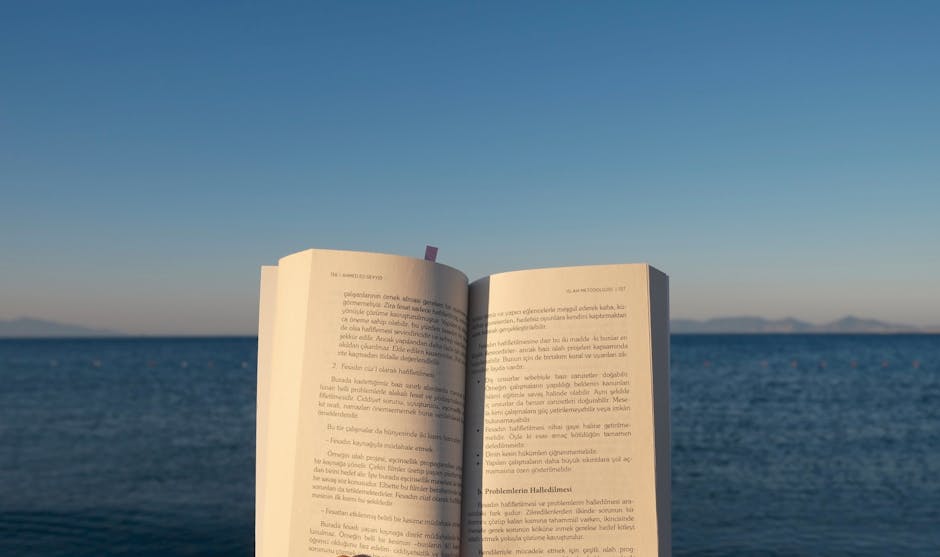
Sometimes you need to see the world on a grand scale to understand your place in it. There is a specific category of photography books that focuses on the environment and the sheer scale of the planet. These aren’t books you read; they are books you experience. They are expensive, often costing as much as a new lens filter, but the inspiration they provide is worth every cent. They remind you that travel photography isn’t just about the “me was here” selfie; it’s about the preservation of the world’s most fragile places.
Sebastião Salgado’s Genesis: A Masterclass in Black and White
Sebastião Salgado spent eight years traveling to the most remote corners of the Earth to create Genesis. It is a staggering achievement. The book is entirely in black and white, which forces you to look at texture, light, and form without the distraction of color. From the icy landscapes of Antarctica to the jungles of the Amazon, the scale of his work is breathtaking. It taught me that black and white isn’t just for “moody” street shots; it’s a powerful tool for landscape photography if you understand tonal range.
I remember looking at his photos of the Galápagos and realizing how much I had ignored textures in my own work. I was so focused on the blue of the water that I missed the incredible patterns in the volcanic rock. Genesis is a giant, heavy tome that retails for about $70 to $100. Pro: Unmatched printing quality and a profound environmental message. Con: It is physically difficult to handle because of its size, and you’ll need a sturdy table to look through it comfortably.
National Geographic: The Photographs
If you want a broad overview of what makes a great travel photo, you go to the source. National Geographic has been defining the genre for over a century. This collection is a survey of their best work, and it’s fascinating to see how the style of travel photography has evolved. In the early days, it was very ethnographic and observational. Today, it’s much more immersive and artistic. This book is a great way to see different styles—from the high-speed wildlife shots of Paul Nicklen to the cultural portraits of Ami Vitale.
What I find most useful about this collection is the variety. It prevents you from getting stuck in one “way” of shooting. You might be a landscape photographer, but seeing a perfectly timed wildlife shot in this book might inspire you to bring a longer lens on your next trip. You can usually pick this up for $30 to $40. Pro: A massive variety of styles and subjects. Con: Because it covers so much ground, it can feel a bit fragmented compared to a single-artist monograph.
Ultimately, these books serve as a bridge. They connect the technical limitations of your gear to the infinite possibilities of your imagination. I still go back to Freeman when I feel my compositions are getting lazy. I still flip through Salgado when I feel like the world is becoming too small and explored. You don’t need to buy them all at once. Start with one technical guide and one book of inspiration. Take them to a coffee shop, leave your phone in your pocket, and just look. Really look. Your next trip will be better for it, not because you have better gear, but because you have a better eye.