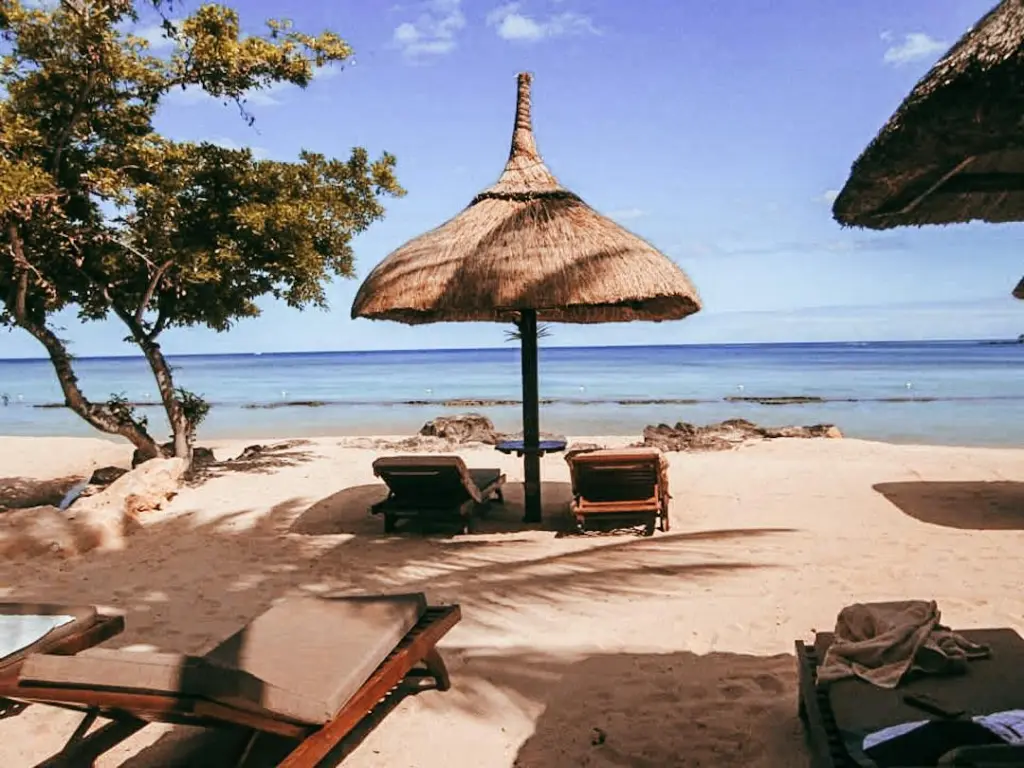
5 reasons to visit Mauritius
Before COVID halted travel, Mauritius was pulling in fewer than 1.5 million visitors a year. For context: that’s roughly how many people visit the Eiffel Tower in three weeks. One of the most geographically layered islands on Earth, and it remains somehow under the radar.
That’s not an accident. Mauritius doesn’t compete on volume. It competes on quality — beaches that vary by coastline, a food culture built from four continents, and a cultural depth that most tropical islands simply can’t replicate. Here’s what actually makes it worth the journey.
The Beaches Are Not All the Same
Most people picture one version of a Mauritius beach: white sand, turquoise lagoon, flat calm water. That version exists. But the island is 65km long and each coastline has a completely different personality, which most travelers miss entirely because they stay anchored to the east coast resort strip and never move.
East Coast: The Postcard Version
Belle Mare and Trou d’Eau Douce are what the travel posters are made of. The reef runs parallel to this stretch of coast, creating a protected lagoon with flat, clear water year-round. Constance Belle Mare Plage sits directly on this stretch — rates from $550/night, but the 2km of private beach frontage is genuinely world-class. LUX* Belle Mare is the more design-forward option from $400/night, with the same reef-protected lagoon access and a slightly younger crowd. If the east coast is all you see, you’ll leave satisfied. But you’ll also leave having seen less than half the island.
West Coast: Wind, Kitesurfers, and the Underwater Waterfall
Le Morne Peninsula on the southwest corner is a completely different animal. Consistent trade winds make it one of the Indian Ocean’s premier kitesurfing destinations — the IKA Kiteboarding World Tour has held events here. The water is rougher, the landscape more dramatic, the vibe more active and less resort-polished. Just offshore sits the famous “underwater waterfall,” a sand-and-silt optical illusion visible from a helicopter that looks like the ocean floor is draining into a trench. Helicopter tours run approximately $150/person for a 30-minute circuit. Worth it once.
North Coast: Day Trips, Markets, and Where to Base Yourself on a Budget
Grand Bay in the north is the social and logistical hub. Catamaran day trips depart from here — most operators charge $70–100/person for a full day that includes snorkeling stops at offshore islets and a grilled lunch onboard. The beach itself is busy and not the most scenic, but the town has the island’s best mix of restaurants and street food. The Caudan Waterfront market in Port Louis, 20 minutes south, is worth a Saturday morning. If you’re staying somewhere quieter, Grand Bay works well as a half-day excursion just to eat your way through the seafront stalls.
The point isn’t that one coast is better. It’s that treating Mauritius as a single static beach destination means missing most of what makes it interesting. The island rewards movement.
The Food Justifies the Flight on Its Own
Mauritius has been colonized by the Dutch, French, and British, and populated by workers from India, China, Madagascar, and East Africa across three centuries. Creole fish curries sit next to Hakka Chinese noodle shops, Indian dholl puri flatbreads, and French-technique pastry — often within the same street block. A plate of octopus Creole curry from a roadside vendor costs about $3. The same dish at a beach restaurant runs $15. Both versions are excellent, and finding both is genuinely easy.
What You Can Actually Do Underwater
The fringing reef system around Mauritius is one of the largest in the world. Here’s what that translates to in practical terms, with current prices:
- Scuba diving at Coin de Mire — a volcanic rock off the north coast with wall dives dropping to 30m and strong fish populations including nurse sharks and barracuda. A two-tank dive with full gear rental runs approximately $90/person from Grand Bay operators. Visibility regularly hits 25–30m during the dry season (May–November).
- Blue Safari Submarine — a genuine pressurized submarine (not a glass-bottom boat, not a semi-submersible) that takes 8 passengers to 35m depth off Trou aux Biches. Cost: approximately $80/adult. You’ll see intact coral fans, sea turtles, and reef sharks without getting wet or needing any dive certification. Book at least three days in advance — capacity is limited and it sells out fast.
- Snorkeling at Blue Bay Marine Park — designated marine protected area in the southeast with strict no-anchor enforcement, which means the coral here is in genuinely good condition compared to similar spots across the region. Entry is free. Snorkel equipment hire on site costs around $10. Best visited early morning before the day-trip boats arrive.
- Kitesurfing lessons at Le Morne — ION Club Le Morne offers beginner packages from $120 for a three-hour session. The wide, shallow lagoon here makes it one of the more forgiving spots to learn in the Indian Ocean region. Instructors are IKO-certified and the spot works year-round, though May–October has the most consistent wind.
- Deep-sea fishing out of Grand Bay — blue marlin, yellowfin tuna, and wahoo are the primary targets. A half-day shared charter starts at around $400 split across up to six people. Full-day trips run $600–800. The season for blue marlin peaks November through April.
For non-water days, Casela Nature Parks in the west offers zip-lining, quad biking, and big cat interaction experiences. Entry is approximately $35/adult, with individual activities priced separately at $20–60 depending on what you book. It’s genuinely well-run and not a tourist trap.
The Cultural Depth That Sets Mauritius Apart
This is the piece that surprises people most. Mauritius is not a beach resort with a token cultural attraction bolted on — it’s a functioning, multicultural society with 400 years of layered and often painful history that’s visible on the street level in ways no other Indian Ocean island can match.
The island has no indigenous population. Everyone living here descended from European colonizers, enslaved Africans, or indentured laborers brought from India and China between the 17th and 20th centuries. That history shows up everywhere: Tamil temples next to mosques next to Catholic churches, often on the same road; a Creole language that blends French grammar with Malagasy vocabulary and Bhojpuri loanwords; a public holiday calendar that includes Diwali, Eid, Christmas, and Chinese New Year as official national observances. No country in the Indian Ocean has this kind of layering.
Aapravasi Ghat in Port Louis is a UNESCO World Heritage Site — the 19th-century immigration depot where over 450,000 indentured laborers arrived beginning in 1834, the first large-scale experiment in indentured labor after the abolition of slavery in the British Empire. It’s a 20-minute walk from the central market, entry is free, and most visitors skip it entirely. That’s a genuine mistake. The small museum is blunt about the conditions, which is exactly what makes it worth an hour.
The Chamarel Coloured Earths — seven distinct bands of volcanic soil in colors ranging from deep red to pale violet — are geologically strange in the best way. The Rhumerie de Chamarel distillery is 2km away and produces some of the better artisan rum in the southern hemisphere. Tours cost $15 including tasting. The Chamarel 8-Year Single Estate Rum sells for approximately $45 a bottle on the island — considerably less than it costs in European specialty liquor stores. It’s a serious product, not a souvenir bottle.
Port Louis market on a Saturday morning is one of the better food markets in the Indian Ocean. Saffron threads, fresh turmeric root, dried chillies, Bourbon vanilla pods, and live mud crabs — all within 500 square meters of covered stalls. Budget $20 and a full hour. The street food stalls outside the covered section serve dholl puri for about $0.80 each, stuffed with split peas and eaten with a pickled vegetable chutney. Order two.
When NOT to Book Mauritius — and Mistakes to Avoid
Is cyclone season really that risky?
November through April is the wet season and the period when cyclone formation is possible. Actual landfalls are infrequent — Mauritius averages less than one significant cyclone every five years — but the risk is real enough to matter for trip planning. January and February are statistically the highest-risk months. If you’re booking during this window because flights and hotels are cheaper (they are, meaningfully so), buy travel insurance that explicitly covers tropical storm disruption. Standard policies often exclude named cyclone events. Check the policy language before purchasing, not after.
Do you actually need to stay at a resort?
No. This is the assumption that either inflates trip budgets to the point of cancellation or pushes travelers toward the Maldives instead. Mauritius has a real guesthouse and self-catering apartment market. Accommodation in Grand Bay, Flic en Flac, or Tamarin runs $60–120/night and puts you inside working neighborhoods with access to local restaurants, street markets, and supermarkets. The St. Regis Mauritius ($800+/night, Private Retreat, Le Morne) is a beautiful property if the budget is there. But treating it as the default option is how travelers spend $500/day eating resort buffet food when there’s a Creole curry vendor 10 minutes down the road charging $4.
Is renting a car worth the hassle?
Yes, without much debate. Roads are well-maintained, driving is on the left (same as the UK and Australia), and a small hatchback rents for $35–50/day through operators like SIXT Mauritius or local outfits in Grand Bay. Taxis exist but become expensive quickly for multi-stop days — drivers charge by trip, not by meter in many cases. Without a car, you’ll realistically see perhaps 30% of the island. The coastal drive from Grand Bay south to Le Morne via Tamarin is one of the more scenic routes in the region and takes under two hours without stops. With stops — Chamarel, Black River Gorges, the viewpoint above Le Morne — it’s a full day.
The single most common mistake first-time visitors make: spending the entire trip inside the resort compound. Mauritius rewards street-level exploration more than almost any comparable island destination. The food, the markets, the cultural sites, the local rum, the Saturday morning chaos of Port Louis — none of it is accessible from a sun lounger on a private beach. Plan at least three full days out of the resort. More if you can.
Mauritius vs. Maldives vs. Bali: Which One Should You Book?
This is the actual question most people are asking when they search for reasons to visit Mauritius. The honest answer is that Mauritius wins for the majority of travelers — specifically because it’s the only one of the three that functions at a range of budgets and has meaningful cultural content outside its beaches.
| Factor | Mauritius | Maldives | Bali |
|---|---|---|---|
| Budget accommodation | Yes — guesthouses from $60/night | Very limited — most atolls are resort-only | Excellent — from $25/night |
| Local food scene | Strong — genuine multicultural cuisine | Weak — most food is resort-controlled | Excellent — one of Asia’s best |
| Cultural depth | High — 400 years of layered history | Low — tourism infrastructure dominates | High — Balinese Hindu ceremony and arts |
| Beach quality | World-class, varied by coast | World-class, largely uniform | Varies — south Bali and Nusa Penida much better than Kuta |
| Diving | Excellent — reef, wall, and wreck | Best reef systems in the world | Good — Nusa Penida is the standout |
| 7-night budget per person (all-in) | $1,200–$3,500 | $3,000–$10,000+ | $600–$2,000 |
| Flight from London | ~11–12 hrs direct (Air Mauritius) | ~10–11 hrs with connection | ~14–16 hrs with connection |
| Best for | Couples, cultural travelers, divers on mid-range budgets | Honeymoon, overwater bungalow, unlimited budget | Solo travelers, backpackers, surf, wellness |
Specific verdict: if your budget for a week is under $2,500/person all-in and you want beaches plus real food plus actual cultural content, book Mauritius over the Maldives without much deliberation. If your budget is uncapped and you want nothing but overwater bungalows and reef snorkeling with zero interest in local culture or food, the Maldives delivers better on that narrow specification. Bali is the right call if budget is the primary constraint — it’s cheaper and has equally good food, but the beaches require more effort to find and the crowds in central Ubud and Seminyak are substantially heavier.