Budget Travel Zurich: Budget Travel in Zurich: How to Keep Daily Costs Under CHF 100
The bill arrives. CHF 28 for a burger and a water. In most European cities, that is dinner with a beer. In Zurich, that is Tuesday at a mid-range café — not a splurge, not a tourist trap, just Tuesday.
Switzerland’s largest city consistently ranks in the top three most expensive cities on earth. That reputation is earned. But Zurich also has a two-tier economy: tourists pay tourist prices, and everyone else does not. The local who commutes in on a Half-Fare Card, eats lunch at Migros, and swims in the lake for free is living well on a fraction of what guidebooks suggest you will spend.
That gap is exploitable. This guide shows exactly how.
What Zurich Actually Costs Per Day: The Real Numbers
Before making any decisions, get the numbers on the table. CHF 1 equals roughly $1.10 USD or €1.00 as of 2026. Prices have not softened. Here is an honest daily breakdown across three spending levels:
| Category | Backpacker (CHF/day) | Budget Traveler (CHF/day) | Mid-Range (CHF/day) |
|---|---|---|---|
| Accommodation | 35–45 (hostel dorm) | 50–70 (budget private room) | 120–180 (3-star hotel) |
| Food | 20–30 (supermarket + one cheap meal) | 40–55 (mix of cafes and self-catering) | 70–100 (restaurants) |
| Transport | 8–10 (ZürichCARD allocation) | 10–15 | 15–25 |
| Activities | 0–10 (mostly free) | 15–30 | 40–80 |
| Daily Total | CHF 63–95 | CHF 115–170 | CHF 245–385 |
CHF 80 per day is achievable. It requires intention, not deprivation. CHF 60 is possible if you eat from supermarkets exclusively and your rail pass already covers city transport. Under CHF 60 means a dorm bed, zero restaurant meals, and no paid activities — sustainable for one or two nights, not a week.
The trap most visitors fall into: assuming that because one meal costs CHF 25, everything does. It does not. The gap between tourist-price Zurich and local-price Zurich is the widest of any European capital. The whole strategy is built on exploiting that gap.
Where to Sleep Without the Hotel Bill
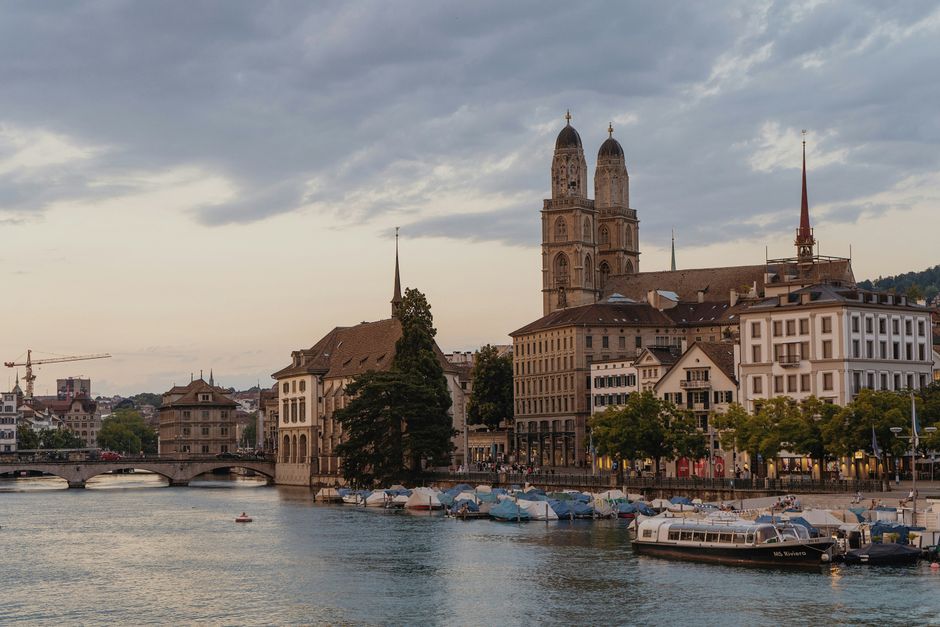
Zurich has three credible budget accommodation options. One is clearly better than the others for most travelers.
City Backpacker Hotel Biber — the standout pick
City Backpacker Hotel Biber at Niederdorfstrasse 5 charges CHF 39–48 per night for dorm beds in 2026. Location is its real selling point: it sits in Zurich’s Niederdorf quarter, the old town, within walking distance of the river, the lake promenade, and the main tram network. Dorms run 4–10 beds. The atmosphere skews young but avoids the party-hostel chaos that makes sleep difficult. Private rooms start around CHF 110, which is genuinely competitive for the city center.
Book direct on their website. It consistently undercuts Hostelworld and Booking.com by CHF 3–6 per night, and you avoid the platform booking fee entirely. On a 5-night stay that is CHF 15–30 saved for doing nothing except not using an aggregator.
Swiss Youth Hostel Zurich — the reliable choice
The official Zurich Youth Hostel (Mutschellenstrasse 114, Wollishofen district) charges CHF 42–58 per night for dorms and CHF 110–140 for double rooms. It is not central — Wollishofen is a 15-minute tram ride south of the Hauptbahnhof — but quality is consistent and the building is well-maintained. Non-members pay a CHF 6 surcharge per night; the annual Swiss Youth Hostels membership costs CHF 33 and breaks even on the third night. If you are doing wider Swiss travel and plan to use youth hostels in Basel, Bern, or Lucerne, buy the membership before your first stay.
Generator Zurich — the social option
Generator Zurich is near the main station and offers dorms from CHF 45–60. It is slightly more expensive than Biber but has better common areas and an in-house bar. If you are planning late arrivals, solo travel, or want to meet other people at the hostel itself, Generator edges ahead. If your focus is using the city and returning to sleep, Biber wins on value-per-franc.
One clear option to avoid: Airbnb private rooms in the CHF 60–80 range. The cheaper listings are almost always in outer districts requiring 30–40 minute commutes. Add cleaning fees and the total usually exceeds hostels. For solo travelers especially, the flexibility and social infrastructure of a hostel beats Airbnb on every metric except privacy.
Eating in Zurich Without the Shock Bill
Can you eat out for under CHF 15?
Yes, but you need to know exactly where. The two most reliable options are Migros and Coop — Switzerland’s two dominant supermarket chains, found throughout Zurich. Both run in-store sit-down restaurants where a hot lunch including a main and water runs CHF 10–14. The Coop Restaurant in Shopville at the main station serves a rotating daily special — rösti, schnitzel, pasta — for CHF 11.50. These are not cafeteria food; they are proper hot meals eaten by Zurich office workers every weekday. Consistently good, consistently the cheapest cooked food in the city center.
The two best value sit-down restaurants
Tibits at Seefeldstrasse 2 near Bellevue charges by weight, roughly CHF 4.60 per 100g. A genuinely filling plate of their vegetarian buffet runs CHF 14–18. The food quality is a cut above what the price suggests. Hiltl on Sihlstrasse 28 is the world’s oldest vegetarian restaurant — open since 1898 — and runs a similar buffet-style lunch for CHF 16–22. Neither place is budget by global standards, but both are the best value available for a proper sit-down meal in the city center. Both are also popular with locals, not tourists, which is always a reliable signal.
The Manora Restaurant on the top floor of the Manor department store on Bahnhofstrasse is a local institution: self-service, large portions, mains from CHF 10–16. The demographic skews older Zurich residents. That alone tells you it is priced honestly.
The Saturday morning shortcut
Bürkliplatz market runs every Saturday from roughly 06:00 to 11:00. Fresh bread, local cheese, seasonal fruit. A solid breakfast costs CHF 5–7. Combine a market breakfast with a Migros or Coop dinner and the day’s food budget stays under CHF 25 without any effort.
The ZürichCARD: Buy It at Arrival
Buy it. The 24-hour ZürichCARD costs CHF 27 (72-hour version: CHF 54) and covers unlimited travel on all trams, buses, and S-Bahn trains within zones 110 and 121 — the entire city plus the airport. A single tram ticket in Zurich costs CHF 4.40. Take seven rides in a day and the card pays for itself. On a normal sightseeing day, seven rides is easy to hit before dinner.
What the card also includes: free entry to over 40 city museums, 50% off several others, and a free airport shuttle connection. If you are arriving by air, the card covers your transfer before you have reached your hostel — that is CHF 6.90 saved before you have unpacked.
The Swiss Travel Pass covers ZVV city transport too, but at CHF 244+ for three days it is only worth it if you are doing extensive national travel. For a city-focused trip, the ZürichCARD is purpose-built and dramatically cheaper. Do not let anyone upsell you on the full pass unless you are spending multiple days traveling between Swiss cities.
Free and Under CHF 10: What Zurich Actually Gives Away
Zurich’s biggest budget secret is how much of what makes it worth visiting costs nothing at all. The lake, the river, the hills, and several major museums are either free or covered by the ZürichCARD.
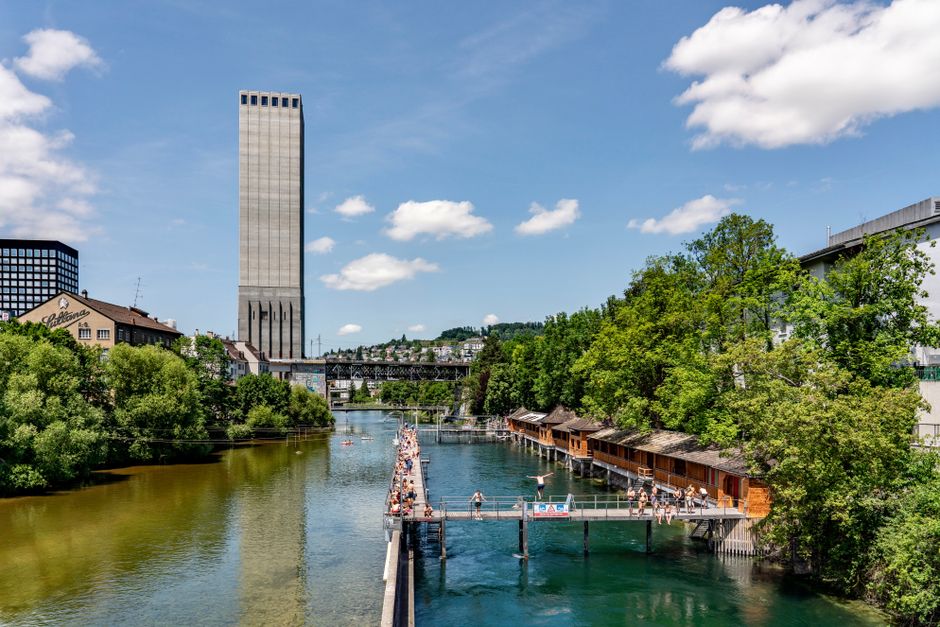
- Lake Zurich swimming — Strandbad Mythenquai and the river pool at Oberer Letten charge CHF 6–8 in summer. Both are free with the ZürichCARD. The lake promenade costs nothing regardless.
- Uetliberg mountain — Zurich’s local peak at 870 meters. Take the S10 train from Hauptbahnhof (covered by ZürichCARD), then a 30-minute hike to the summit. Clear-day views stretch to the Alps. Zero cost beyond the card.
- Swiss National Museum (Landesmuseum) — Free entry, no card required. Located directly next to the main station, the building is a 19th-century neo-Gothic structure built specifically to house Swiss cultural artefacts. Worth an hour minimum.
- Kunsthaus Zürich — Switzerland’s largest art museum: Monet, Chagall, Giacometti. Standard entry is CHF 23, but it is free on the first Wednesday of each month, and free at all times with the ZürichCARD. Time your visit accordingly.
- Lindenhügel — A small wooded hill 20 minutes on foot from the old town. Benches, shade, views over the rooftops toward the lake. Popular with locals on lunch breaks. No entrance, no ticket.
- Fraumünster church — The Marc Chagall stained-glass windows inside are genuinely world-class. Entry is CHF 5. It is the one paid attraction on this list that is worth paying for regardless of whether you have the card.
- Niederdorf evening walk — The old town’s cobblestone streets cost nothing to walk. A single beer at a standing bar in the area runs CHF 6–8, which is as reasonable as Zurich gets after dark.
Four Mistakes That Make Zurich Feel Unaffordable
Most budget horror stories from Zurich trace back to the same four errors. Avoid these and the city becomes substantially more manageable.
Eating near landmarks
Any restaurant within 200 meters of Grossmünster or along Bahnhofstrasse will charge CHF 30–45 for a main course. That is not Zurich’s baseline — it is the tourist premium. Walk two streets in any direction and prices drop 30–40%. In any expensive city the rule is the same: cross the river once, find where people in work clothes are eating at noon, sit down.
Paying for individual tram rides
At CHF 4.40 per single ticket, three rides is CHF 13.20. A full sightseeing day with 6–8 tram trips costs CHF 26–35 in single tickets — nearly the price of the 24-hour ZürichCARD at CHF 27. People who pay per-ride consistently overspend on transport by 40–60% compared to those who buy the daily card. This is the single most common and most avoidable Zurich budget mistake.
Booking hostels through aggregator platforms
Hostelworld and Booking.com add fees that push nightly hostel costs up by CHF 4–8 per night. On a five-night stay that is CHF 20–40 in pure platform markup. Both City Backpacker Hotel Biber and the Swiss Youth Hostel Zurich accept direct bookings with no surcharge. Book direct every time.
Staying too long without a strategic reason
Zurich rewards two to three nights. After that, the cost-to-experience ratio tilts against you. Bern is 56 minutes by train and measurably cheaper for accommodation. Basel has better hostel stock. Lucerne is worth a day trip without the overnight cost. If Zurich is pushing your budget, use it as a transit hub and base yourself in a cheaper Swiss city. The country’s rail network makes this practical in a way that does not apply elsewhere in Europe.
A Realistic 3-Day Budget in CHF
Here is what a realistic three-day Zurich trip looks like when you apply everything above. All figures are 2026 estimates.
| Day | Activity or Expense | Cost (CHF) | Notes |
|---|---|---|---|
| Day 1 | 72-hour ZürichCARD (covers all 3 days) | 54 | Buy at ZVV desk in airport arrivals |
| Day 1 | Landesmuseum + Niederdorf walk | 0 | Museum free, walk free |
| Day 1 | Lunch at Coop Restaurant (main station) | 12 | Daily special + water |
| Day 1 | Migros supermarket dinner | 9 | Prepared meals section |
| Day 2 | Uetliberg mountain hike | 0 | S10 train covered by card |
| Day 2 | Tibits lunch (Bellevue) | 16 | Buffet by weight |
| Day 2 | Kunsthaus Zürich (first Wednesday of month) | 0 | Otherwise free with ZürichCARD |
| Day 2 | Beer at Niederdorf standing bar | 7 | One drink, local bar |
| Day 3 | Bürkliplatz Saturday market breakfast | 6 | Bread, cheese, coffee — Saturday only |
| Day 3 | Oberer Letten river pool swim | 0 | Free with ZürichCARD |
| Day 3 | Fraumünster church | 5 | Chagall windows — pay this one |
| Day 3 | Manora lunch + Hiltl dinner | 30 | ~CHF 12 + ~CHF 18 |
| 3-Day Total (excluding accommodation) | CHF 139–145 | ~CHF 47/day non-accommodation | |
Add City Backpacker Hotel Biber dorm beds at CHF 42–48 per night and the full three-day trip lands around CHF 265–290 total — roughly CHF 88–97 per day. That is inside the CHF 100 target with a small buffer for a coffee or an unexpected entry fee.
The 72-hour ZürichCARD at arrival, direct hostel bookings at Biber, lunches at Coop or Tibits, and the lake or Uetliberg instead of paid tourist attractions: that is the actual budget Zurich playbook. The city stops being a budget-killer the moment you stop paying tourist prices for things that locals access for free.