
Passport Renewal 2026: What Changed and How to Avoid Delays
You book a flight to Tokyo six months out. You check your passport. It expires in eight months. No problem, you think. That is a problem. In 2026, the U.S. Department of State is still working through a backlog that started in 2026, and processing times have not fully recovered. Add new security checks for certain countries, and your routine renewal can turn into a 14-week wait. This article covers exactly what changed, how long things actually take, and what to do right now so you are not stuck at the airport counter.
The Real State of Passport Processing in 2026
In early 2026, routine passport processing sits at 10–13 weeks. Expedited service (an extra $60) runs 7–9 weeks. Those numbers sound fine until you realize the clock starts when the application is received, not when you mail it. A two-week mail delay plus a 13-week processing window eats four months.
The root cause is not just staffing. The State Department introduced additional verification steps for first-time applicants and renewals where the previous passport was issued more than 15 years ago. That covers a lot of people who let their passport lapse during the pandemic.
Here is the specific cost breakdown for 2026:
| Service Type | Fee | Processing Time (2026) | Best For |
|---|---|---|---|
| Routine (adult renewal) | $130 | 10–13 weeks | No travel within 5 months |
| Expedited (add-on) | $190 ($130 + $60) | 7–9 weeks | Travel in 3–5 months |
| Expedited at Agency (appointment required) | $190 + $35 execution fee | Same day to 2 weeks | Travel within 14 days |
| Passport Card (wallet-sized, land/sea only) | $30 | Same as book | Canada, Mexico, Caribbean cruises |
The single most important takeaway: If your passport expires within 12 months, renew now. Do not wait until you have a ticket. The 2026 processing times are not a temporary spike — they are the new normal.
Which Countries Now Require an Electronic Travel Authorization (ETA) in 2026
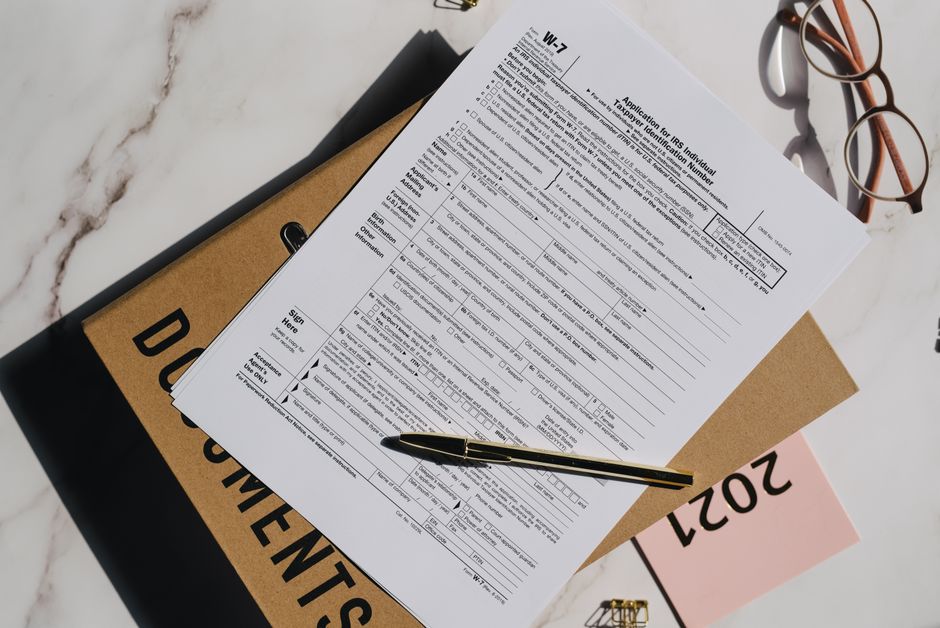
This is the change nobody talks about until they are at the gate. Several countries have switched from visa-on-arrival or visa-free entry to mandatory pre-approved electronic travel authorizations. These are not visas, but they are not automatic either. The application is online, costs money, and takes time to process.
As of 2026, these countries require an ETA for U.S. passport holders:
- United Kingdom — Electronic Travel Authorization (ETA) required starting January 2026 for all non-visa nationals. Cost: £10. Processing: 3–5 business days. You must apply before boarding.
- European Union — ETIAS (European Travel Information and Authorisation System) is scheduled to go live in mid-2026, but has been delayed multiple times. Check the official ETIAS website before booking. If active in 2026, expect a €7 fee and 72-hour processing.
- Australia — ETA (subclass 601) via the Australian ETA app. Cost: AUD 20. Processing: instant to 12 hours.
- South Korea — K-ETA. Cost: ₩10,000 (about $7.50). Processing: 24–72 hours. Valid for two years.
- New Zealand — NZeTA. Cost: NZD 12 (app) or NZD 9 (web) + NZD 35 International Visitor Conservation and Tourism Levy. Processing: up to 72 hours.
Do not assume visa-free means no paperwork. These ETAs are linked to your passport number electronically. If you renew your passport between applying for the ETA and traveling, the ETA is invalid. You have to reapply with the new passport number.
Three Visa Mistakes That Derail International Trips
Mistake 1: Assuming the visa process is the same as last year. India, Turkey, and Vietnam all updated their e-visa systems in 2026–2026. India now requires a biometric appointment for certain visa categories. Turkey’s e-visa now asks for proof of accommodation before approval. Vietnam’s e-visa (single entry, 30 days) costs $25 and takes 3 business days, but the official website is notoriously confusing — many travelers accidentally use third-party sites that charge $80+.
Mistake 2: Ignoring passport validity rules. Many countries require your passport to be valid for six months beyond your departure date from that country. This is not the same as your return date. If you arrive in Thailand on June 1 and leave June 15, your passport must be valid until at least December 15. A passport expiring in November will get you denied boarding. Countries enforcing this strictly in 2026: Thailand, Indonesia, Vietnam, Singapore, Malaysia, India, Kenya, South Africa, Brazil, and most of the Schengen Area.
Mistake 3: Applying for a visa too early. Some visas (like the Schengen short-stay visa) can only be applied for within 90 days of travel. Others (like the Australian ETA) are valid for 12 months. Know the window. Applying too early means the visa expires before you travel. Applying too late means you are stuck waiting.
Fix: Create a spreadsheet with these columns: destination, visa type, application window, processing time, required documents, passport validity needed. Update it every time you book a trip.
Global Entry and TSA PreCheck: What Changed for 2026

Global Entry membership now costs $120 for five years (up from $100 in 2026). TSA PreCheck remains $78 for five years. The renewal process for both is mostly online, but Global Entry requires an in-person interview unless you qualify for the interview-on-arrival option.
The real change in 2026: Global Entry processing times are longer than advertised. Conditional approval (the step before the interview) now takes 4–6 months for new applicants, not the 2–4 weeks the website claims. Renewals are faster — about 2–4 weeks for conditional approval — but still not instant.
If you travel internationally more than twice a year, Global Entry pays for itself in time saved at customs. But do not apply for Global Entry two weeks before a trip. It will not be ready. Apply at least six months before your next international flight.
TSA PreCheck is a separate program. It costs less, requires no interview (just an in-person identity verification at an enrollment center), and is valid for domestic and some international flights. If you mainly fly domestic, PreCheck is the better value. If you fly internationally, get Global Entry — it includes PreCheck.
How to Digitally Organize Your Travel Documents (And Why Paper Copies Still Matter)
Losing your passport in a foreign country is not a disaster if you have backups. Losing it with no backups is a multi-day ordeal involving police reports, embassy appointments, and emergency passport fees ($145 in 2026).
Here is the system that works:
- Three digital copies of every document. One on your phone (in a secure folder or encrypted PDF), one in cloud storage (Google Drive, iCloud, or Dropbox), and one emailed to yourself. Documents to include: passport photo page, visa pages, driver’s license, birth certificate (if traveling with minors), travel insurance policy, vaccination records.
- Two physical copies. One set in your carry-on bag, one set in your checked luggage (or with a travel companion). Keep them separate from the originals.
- One emergency contact. Give a trusted person at home access to your cloud folder. If both your phone and laptop are stolen, they can email you the files.
Paper copies matter because not every country has reliable internet. If your phone dies and the local police station has no Wi-Fi, a printed passport copy gets you a temporary document faster. In 2026, some countries (including Japan and South Korea) require hotels to scan your physical passport at check-in. A digital photo on your phone is not accepted — you need the actual book.
Do not store passport photos in your regular camera roll. If your phone is lost, anyone can access them. Use a password-protected app like Google Files (Safe folder) or a dedicated document scanner app that encrypts files.
The Documents Most Travelers Forget (But Shouldn’t)
Beyond passport and visa, these documents cause the most problems at borders and check-in counters:
Return or onward ticket. Many countries require proof of departure. A one-way ticket to Thailand without an onward booking can get you denied entry. The solution: book a refundable onward ticket or use a service like OnwardTicket (about $10) that generates a real reservation that cancels itself after 48 hours.
Travel insurance policy. Not required everywhere, but Cuba, Ecuador, and several Schengen countries now ask for proof of medical coverage at immigration. Your policy should cover at least $50,000 in medical expenses and repatriation. Print the policy summary page.
International Driving Permit (IDP). Required in Japan, South Korea, Italy, Spain, and many other countries. Your U.S. driver’s license is not enough. An IDP costs $20 from AAA or AATA and is valid for one year. Get it before you leave — you cannot get one overseas.
Yellow fever vaccination certificate. Required for entry to many countries in Africa and South America if you are arriving from a country with yellow fever. The certificate is a physical document (the yellow card). Digital copies are not accepted. Check the CDC’s destination list before you fly.
Letter of invitation or hotel bookings. Some countries (Russia, Iran, Cuba) require a letter of invitation from a local host or tour operator. Others (Schengen Area) require confirmed hotel bookings for the entire stay. Do not book refundable hotels and cancel them after getting the visa — some countries now check on arrival.
Bottom line: The difference between a smooth trip and a nightmare at immigration is often a single piece of paper. In 2026, with longer processing times and stricter entry requirements, preparation is not optional. It is the difference between boarding your flight and watching it leave without you.