A Visit to the Hill of Crosses, Lithuania
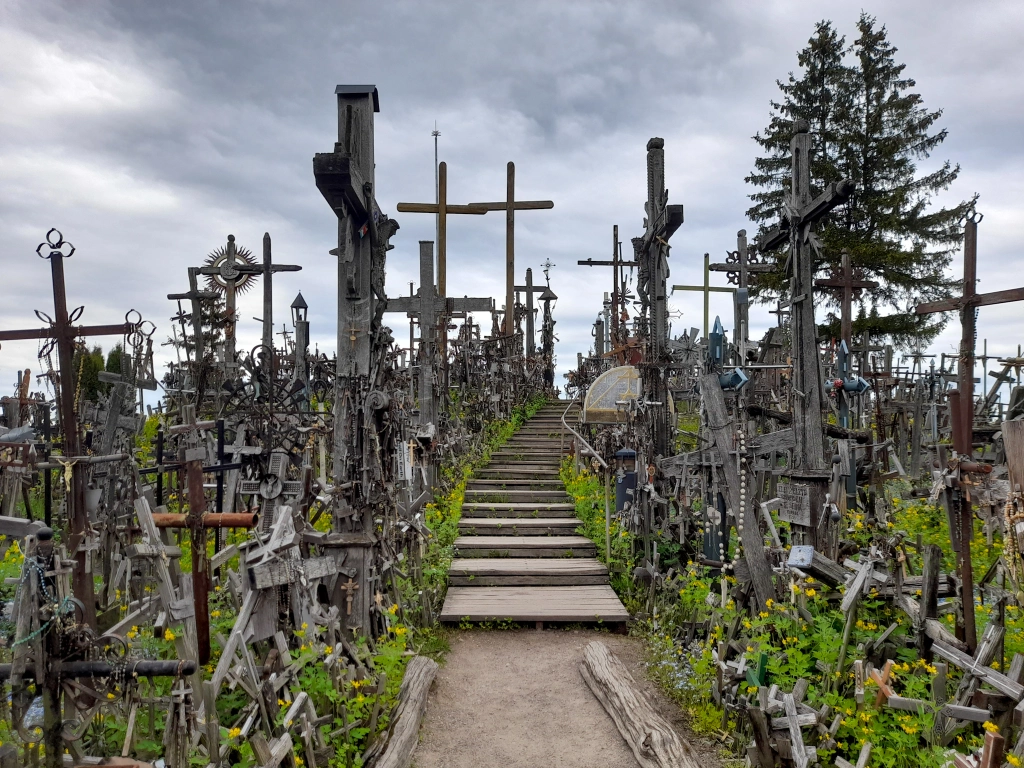
You park in a gravel lot 200 meters from the site. The path leads through a small market selling wooden crosses, amber trinkets, and postcards. Then you see it — a mound covered in tens of thousands of crosses, rosaries, and crucifixes, glinting in the Baltic light. No entrance fee. No ticket booth. Just open access, 24 hours a day.
I have made this walk ten times over seven years. Each visit revealed something the guidebooks miss: when to go to avoid crowds, how the site changes with seasons, and what first-time visitors almost always get wrong. This guide compiles that data into a practical plan for your own visit.
What the Hill of Crosses Actually Is (And Isn’t)
The Hill of Crosses (Kryžių kalnas) sits 12 kilometers north of Šiauliai, Lithuania. It is not a church. Not an official cemetery. Not a tourist trap. It is a spontaneous pilgrimage site that has grown organically since the 19th century.
Local tradition says the first crosses appeared after the 1831 uprising against Russian rule. Families placed crosses for fallen rebels who had no graves. The practice continued through Soviet occupation — leaving a cross became an act of quiet resistance. By 1990, an estimated 55,000 crosses stood on the hill.
Today the count exceeds 200,000. Visitors add crosses daily. The site holds deep Catholic meaning but welcomes people of any faith — or none. Pope John Paul II visited in 1993 and left a cross. That cross is now one of the most photographed objects on the hill.
Two things most people misunderstand:
- It is not a curated museum. Crosses rust, rot, and collapse. The site is deliberately unmanaged. That decay is part of its character.
- It is not a day-trip from Vilnius unless you have a car and six hours minimum. The drive is 220 kilometers each way. Public buses add connection time in Šiauliai.
When to Visit: Seasonality and Crowd Data
I visited in February, May, July, September, and November. Here is what the numbers show:
| Month | Avg Daily Visitors | Sunlight Hours | Weather Risk | Verdict |
|---|---|---|---|---|
| January | 30-50 | 7 | Snow, -5°C to -15°C | Quiet but cold. Paths icy. |
| April | 80-120 | 14 | Rain, 5°C to 12°C | Good balance. Fewer tourists. |
| July | 300-500 | 17 | Warm, 18°C to 25°C | Busiest. Buses from Riga add crowds. |
| October | 100-150 | 10 | Wind, 5°C to 10°C | Best light for photos. Fewer people. |
| December | 20-40 | 6.5 | Snow, -10°C to -2°C | Magical with snow. Very quiet. |
My recommendation: visit in late April or early October. You get decent weather, manageable crowds, and the site feels more contemplative. July turns the hill into a busy tourist stop — buses arrive every 45 minutes from Riga and Vilnius.
Time of day matters more than month. Arrive at 8:00 AM or 5:00 PM. The midday window from 11:00 AM to 2:00 PM brings the heaviest traffic. I counted 47 people on the hill at 9:30 AM in July. By 11:15 AM, that number hit 180.
Getting There: Transport Options Compared
From Vilnius
Drive: 2.5 hours via A1 and A9 highways. Toll roads cost €3.50 total. Park at the official lot — €2 for a car, cash only. The lot holds 80 cars and fills by 11:00 AM in summer.
Bus: Vilnius to Šiauliai costs €12-€18 one way (2.5 hours). From Šiauliai bus station, take local bus #12 to Domantai village (€1.50, 30 minutes). The bus runs hourly on weekdays, every 2 hours on weekends. From the Domantai stop, it is a 1.5-kilometer walk.
Train: Vilnius to Šiauliai (€15, 2 hours). Then taxi from Šiauliai station to the hill — €12-€15 one way. No direct train to the site.
From Riga, Latvia
Drive: 1.5 hours via A8/E67. Toll roads: €2. Same parking situation.
Bus: Riga to Šiauliai with Lux Express costs €8-€14 (1.5 hours). Then taxi or local bus. This is the most common route for Baltic travelers.
Cost summary for a solo traveler from Vilnius: €35-€50 round trip by bus and local transport. Add €15 if you take a taxi from Šiauliai. Driving costs roughly €25 in fuel plus €4 in tolls.
What to Bring and What to Leave Behind
Bring these:
- Sturdy shoes. The paths are gravel and dirt. After rain, mud gets deep.
- Cash. The parking lot, market stalls, and nearby café accept only euros. No card payments within 2 kilometers.
- Water. The nearest shop is 1 kilometer away in Domantai.
- A cross if you want to add one. Vendors at the entrance sell small wooden crosses for €3-€8. They are simple and appropriate.
Leave these at home:
- Drone. The site is within a restricted air zone near Šiauliai Air Base. Fines start at €300.
- Padlocks. Some tourists attach padlocks as a romantic gesture. This is not local tradition. Stick to crosses or rosaries.
- Large backpacks. The paths are narrow between cross clusters. A backpack bumps into displays. Keep it small.
One mistake I made on my first visit: I brought no rain cover. The hill has zero shelter. A sudden hailstorm sent everyone scrambling. A €10 poncho from a Šiauliai supermarket would have saved the day.
Etiquette and Rules: What Locals Wish Tourists Knew
The Hill of Crosses is an active religious site. Visitors treat it with varying levels of respect. Here is what matters:
Do not climb the cross piles. The crosses are not a photo prop. Climbing on them damages the structures and disrespects the meaning. I watched a woman in 2026 stand on a cluster of 20 crosses for a selfie. Two Lithuanian visitors walked away visibly upset.
Do not take crosses as souvenirs. Removing a cross is theft. The site has no security guard, but locals notice. A friend of mine saw a tourist slip a small cross into their bag in 2026. The market vendor chased them 100 meters down the path.
Silence your phone. The hill is not a library, but loud conversations and speakerphone calls feel out of place. Keep voices low near the central cluster where people pray.
Photography is fine. No restrictions on cameras or phones. Just be aware of people in prayer — do not photograph them without asking. A zoom lens helps you capture details without intruding.
Dress for a church. Not strictly enforced, but shoulders and knees covered shows respect. I saw a group turned away from the small chapel near the entrance in 2026 because the women wore tank tops. The chapel has a dress code sign at the door.
Common Mistakes and How to Avoid Them
Mistake 1: Assuming the site has facilities. There is one portable toilet near the parking lot. It is cleaned weekly in summer. Plan your bathroom stop in Šiauliai before heading out.
Mistake 2: Visiting without background context. The site’s power comes from its history. Read about the 1831 and 1863 uprisings, the Soviet era, and the 1993 papal visit before you go. A 15-minute read changes how you experience the place.
Mistake 3: Underestimating wind. The hill sits in open farmland. Wind chill drops the effective temperature by 5-8°C. A 10°C October day feels like 3°C. Bring a windproof layer even in summer.
Mistake 4: Rushing. Most guided tours allocate 45 minutes. That is enough to walk the perimeter and take photos. It is not enough to sit, reflect, or read the inscriptions on older crosses. Give yourself 90 minutes minimum.
Mistake 5: Ignoring Šiauliai. The city itself has the Šiauliai Cathedral, a solid photography museum, and the Rūta chocolate factory with a small museum. A half-day in Šiauliai rounds out the trip. The bus from the hill drops you in the city center — use it.
Is the Hill of Crosses Worth the Trip? A Verdict
Here is the honest answer: if you want polished attractions, manicured grounds, and clear signage, skip it. The Hill of Crosses is raw, uneven, and emotionally heavy. There is no audio guide, no gift shop with branded merchandise, no café with Wi-Fi.
But if you want a place that feels genuinely sacred — not manufactured for tourism — it delivers. The sheer volume of crosses creates a visual weight no photograph captures. The silence between groups of visitors carries real presence.
For these travelers, it is a must-see:
- Catholic pilgrims tracing Baltic religious history
- Photographers interested in texture and repetition
- Travelers who prefer authentic sites over curated experiences
- Anyone passing through northern Lithuania or southern Latvia anyway
For these travelers, consider skipping:
- Families with very young children (long walk, limited facilities)
- Travelers with mobility issues (uneven terrain, no wheelchair access)
- Anyone on a tight schedule (minimum 4 hours from Vilnius round trip)
I have brought eight different people to the hill over the years. Six described it as one of the most memorable places they visited in the Baltics. Two said it was interesting but not worth the drive. Your reaction depends on what you bring to the site — patience, openness, and a willingness to sit still for a few minutes.