Travel Accessories Dublin: 7 Items You’ll Actually Use on a Trip
You step out of the hotel on Dame Street. It’s not raining yet, but the sky has that Dublin look — grey and heavy. Your phone battery is at 40%. You have a paper map that’s already tearing at the fold. Your shoulders are wet from a light mist, and you haven’t even reached Temple Bar.
I made that walk six times across three trips before I figured out the problem wasn’t Dublin. It was what I brought. Most travel accessories sold online are designed for beaches or airports, not for a city where it rains 157 days a year and the best pubs sit at the end of narrow, cobbled lanes.
This article names seven specific items that solve real Dublin problems. No affiliate links. No fluff. Just what works, why it works, and where the tradeoffs are.
Why Most Travel Accessories Fail in Dublin’s Actual Conditions
Dublin is a walking city. You’ll log 15,000 to 25,000 steps per day hitting Trinity College, Kilmainham Gaol, and the pubs around Grafton Street. That means every gram in your bag gets multiplied by ten thousand steps.
The second problem is weather. Dublin gets 40 inches of rain per year — similar to Seattle — but it arrives in short, unpredictable bursts. A heavy downpour jacket is overkill. A cheap umbrella snaps in the wind off the Liffey. You need gear that handles mist, drizzle, and the occasional soak without taking up half your bag.
Most travel accessories fail on three fronts: they assume dry conditions, they assume flat terrain, and they assume you’ll spend most of your time in tourist zones with easy access to your hotel. Dublin doesn’t work that way. You’ll be in a pub in Smithfield, then walking to St. Michan’s Church, then crossing the Ha’penny Bridge in a sudden shower. Your gear needs to handle transitions, not just one environment.
The third failure mode is security. Pickpocketing in Dublin is not extreme, but it’s real — especially on crowded buses, in Temple Bar at night, and on the Luas tram. A backpack with an easy-access front pocket is an invitation. You need something a thief can’t open without you noticing.
So here’s the rule: every accessory on this list must survive a 12-hour day in Dublin, from the morning coffee at Bewley’s to the last pint at The Brazen Head. If it can’t, it doesn’t belong in your bag.
The 7 Travel Accessories That Actually Work in Dublin
1. Osprey Daylite Plus (20L, $75)
This is the best daypack for Dublin, period. It weighs 420 grams, has a padded laptop sleeve that fits a 13-inch MacBook, and compresses flat when empty. The mesh back panel keeps your spine dry even when you’re sweating up Grafton Street hill.
Why it beats the competition: the Osprey Daylite Plus has a sternum strap with a whistle buckle, which matters when you’re navigating crowds at the Guinness Storehouse. The front pocket is organized — two mesh slots, one zippered coin pocket — so your Leap Card, earphones, and hand sanitizer don’t turn into a tangled mess.
Tradeoff: no hip belt. For a lightweight daypack, that’s fine. If you’re carrying a water bottle plus a rain jacket plus a camera, the load sits on your shoulders. But for most Dublin days, it’s comfortable enough.
2. Pacsafe Citysafe CX (18L, $130)
If you’re worried about theft, this is the answer. The Pacsafe Citysafe CX has a stainless steel mesh embedded in the fabric that a knife can’t slash. The zippers lock with a clip. The strap is cut-resistant with a Dyneema core.
I tested this on a packed Luas tram from Heuston Station to Abbey Street. The bag sat on my back, and I didn’t think about it once. That’s the point — you stop worrying, so you can actually look at the Book of Kells instead of checking your pockets every 30 seconds.
It also has a built-in RFID-blocking pocket for your passport and credit cards. Dublin Airport’s contactless payment gates accept cards with RFID, and having that layer of protection is cheap insurance.
Tradeoff: it’s heavier than the Osprey (510g) and the fabric is stiffer. Not a problem for daily use, but if you’re packing it flat in a suitcase, it takes up more space.
3. Anker PowerCore 10,000mAh (10,000mAh, $26)
Your phone will die in Dublin. Google Maps drains battery fast, especially when you’re walking between St. Patrick’s Cathedral and Christ Church. The Anker PowerCore 10,000 weighs 180 grams and charges an iPhone 14 twice. It’s smaller than a deck of cards.
Why this specific model: it has a USB-C input and a USB-A output, so you can charge it with the same cable you use for your laptop. The LED indicator shows remaining charge as four dots. No guessing.
Tradeoff: 10,000mAh is enough for one heavy day. If you’re also charging a camera or a tablet, bump up to the 20,000mAh version ($40, 340g). But for a single day in Dublin, 10,000 is the sweet spot.
4. Patagonia Houdini Jacket ($99, 110g)
This is not a rain jacket. It’s a wind shell with a DWR (durable water repellent) coating. For Dublin’s typical weather — light mist, gusty wind, the occasional five-minute shower — it’s perfect. It packs into its own pocket, about the size of a tennis ball.
The Patagonia Houdini handles 90% of Dublin’s weather. For the other 10%, when a real downpour hits, you duck into a pub. That’s the Dublin way.
Tradeoff: it’s not waterproof for extended rain. If you’re walking the Howth Cliff Walk in steady rain, you need a shell with taped seams. But for city walking, the Houdini is lighter and more breathable than any rain jacket I’ve used.
5. Sea to Summit Ultra-Sil Day Pack (20L, $25, 65g)
You’ll buy things in Dublin. A wool sweater from Aran Sweater Market. A bottle of Jameson from the distillery. A book from Hodges Figgis. Suddenly your daypack is full, and you need a second bag.
The Sea to Summit Ultra-Sil Day Pack folds into a pouch the size of a Clif Bar. It’s made of 30-denier silicone-coated nylon. It holds 20 liters, has a single buckle closure, and weighs 65 grams. I keep one in my jacket pocket at all times.
Tradeoff: no padding, no zipper, no structure. If you put a glass bottle in it, the bottle will press against your back. But as a backup bag for overflow, it’s unbeatable.
6. Vapur Element Water Bottle (1 liter, $15, 35g)
Tap water in Dublin is excellent. It comes from the Wicklow Mountains, and it’s free everywhere — pubs, cafes, hotel lobbies. The Vapur Element is a flexible plastic bottle that folds flat when empty. Fill it at your hotel, carry it all day, and refill at any pub that serves coffee.
Why not a rigid Nalgene? Because it takes up space when empty. The Vapur rolls up to the size of a granola bar. It also has a carabiner clip, so you can hang it from your bag while you’re walking.
Tradeoff: the plastic taste is noticeable for the first three uses. Wash it with baking soda, and it fades. Also, the screw cap is not leak-proof if you squeeze the bottle hard. Keep it upright in your bag.
7. Anker PowerLine+ USB-C Cable (3 feet, $13)
This sounds trivial. It’s not. Cheap cables fray within weeks. The Anker PowerLine+ has a braided nylon exterior and a Kevlar core. It’s rated for 10,000 bends. I’ve had mine for two years, and it looks new.
In Dublin, you’ll charge your phone at pubs, cafes, and the airport. The cable gets yanked, twisted, and coiled constantly. A cheap cable fails exactly when you need it most — at 10 PM in a pub with 5% battery.
Tradeoff: it’s stiff. The braided nylon doesn’t coil as neatly as a rubber cable. But it won’t break, which is worth the minor inconvenience.
What NOT to Bring to Dublin (And What to Bring Instead)
This section is as important as the recommendations. I’ve made every mistake below.
| Item | Why It Fails in Dublin | Better Alternative |
|---|---|---|
| Large umbrella (42-inch arc) | Catches wind on O’Connell Street, breaks, becomes a weapon in crowds | Small travel umbrella (21-inch arc, $20) or the Patagonia Houdini |
| Heavy rain jacket (500g+) | Takes up half your daypack, too warm for 50°F drizzle | Wind shell + light fleece (e.g., Patagonia Houdini + R1 fleece) |
| Leather boots (1.5kg pair) | Heavy, slow to dry, slippery on wet cobblestones | Trail runners with good grip (e.g., Merrell Moab Speed, $140) |
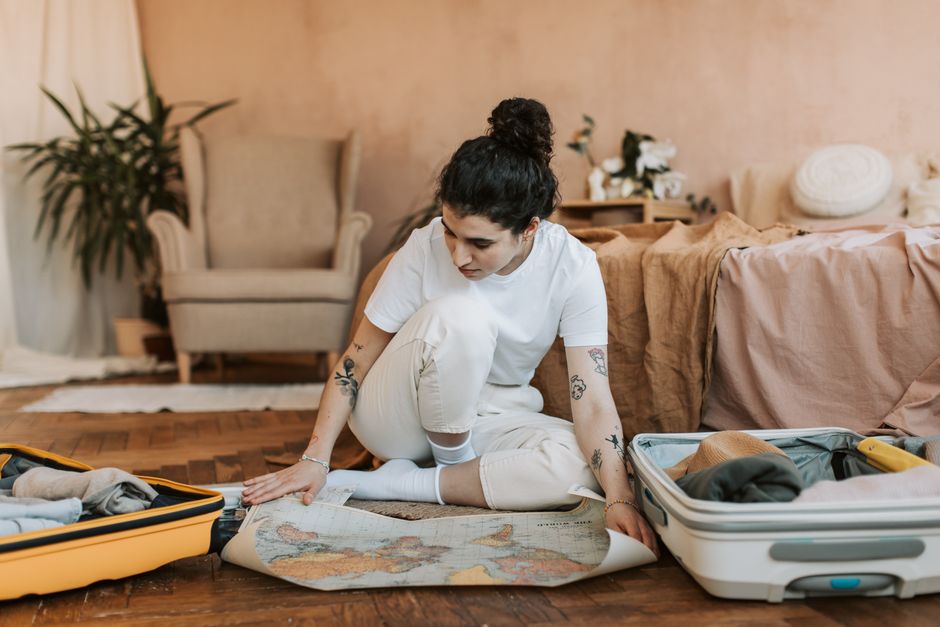
| Paper map | Tears in rain, hard to fold, no public transport info | Google Maps offline (download before you leave) + Anker PowerCore |
| Money belt | Uncomfortable, obvious, signals “I’m a tourist with cash” | Pacsafe bag with slash-proof strap + hidden pocket in jacket |
The common thread: most travel accessories are designed for dry, calm conditions. Dublin is not that. Bring gear that handles moisture, wind, and crowds without adding weight.
How to Pack These 7 Items for a 4-Day Dublin Trip
Here’s the exact packing strategy I use. It fits in a 30-liter backpack (I use the Osprey Farpoint 40, but a 30L works for four days).
Step 1: Base layer. The Patagonia Houdini goes in the top pocket of your daypack, always accessible. The Sea to Summit Ultra-Sil Day Pack goes in your jacket pocket.
Step 2: Electronics pocket. The Anker PowerCore and Anker PowerLine+ go in the front mesh pocket of the Osprey Daylite Plus. The Vapur bottle clips to the outside. You can charge your phone while walking — just run the cable from the side pocket to your hand.
Step 3: Security layer. If you’re using the Pacsafe Citysafe, keep your passport and credit cards in the RFID pocket. Your Leap Card goes in the front zippered pocket for quick access at Luas gates.
Step 4: Daily rotation. Each morning, fill the Vapur at the hotel. Charge the PowerCore overnight. Check the weather — if rain is forecast, the Houdini goes on top of your bag, not inside it.
Step 5: Pub mode. When you enter a pub, take off your daypack and put it on the floor between your feet. The Pacsafe’s locking zipper means you can relax. The Vapur goes on the table — the bartender will refill it with tap water for free.
That’s it. Seven items, one system, zero wasted space.
The One Accessory You Should Never Forget: Your Attitude
This sounds like a cliché. I mean it literally.
Dublin is a city of conversations. The best experiences I’ve had there — a guided tour of Glasnevin Cemetery, a spontaneous trad session in a pub on Camden Street, a recommendation for the best fish and chips from a stranger on the bus — all started because I was present, not because I had the right gear.
The accessories on this list are tools, not solutions. They exist to remove friction: wet clothes, dead battery, stolen wallet. Once those problems are solved, the real trip begins. You walk into a pub at 6 PM, order a pint of Guinness, and talk to the person next to you. That’s the entire point.
Pack light. Stay dry. Keep your phone charged. And when someone at the bar asks where you’re from, tell them. That conversation is the accessory no store sells.