2 days in Riga – A Perfect Itinerary
You land in Riga on a Friday evening. Saturday morning you wake up jet-lagged, grab a coffee, and stare at a map. Where do you start? The Old Town? The Central Market? The Art Nouveau district? You have 48 hours. Every wrong turn costs you an hour you don’t have.
This itinerary is built on real data: walking distances, opening hours, entry fees, and transit schedules. No fluff. No “wander aimlessly and discover hidden gems.” You get a schedule that maximizes what you actually see, eat, and learn in two days. Total walking: about 12 km per day. Total cost for all paid attractions listed: roughly €35 per person.
Day 1 – Old Town Core and the Central Market
Day one focuses on the historic center. Everything is walkable. The entire Old Town fits inside a 2 km perimeter. You can cross it in 15 minutes if you walk fast. The trick is knowing which streets hold the real history and which are souvenir traps.
Morning: House of the Blackheads and St. Peter’s Church (9:00 AM – 12:00 PM)
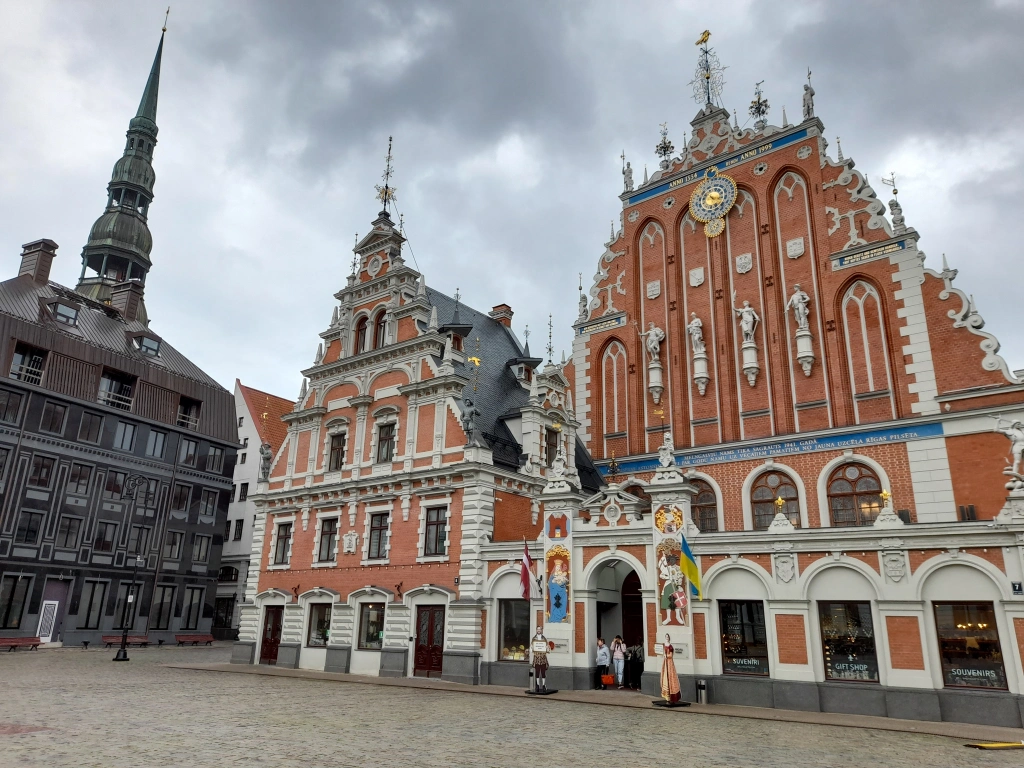
Start at the House of the Blackheads (Rātslaukums 7). It opens at 10:00 AM. Entry is €8 for adults. The building was reconstructed in 1999 after being destroyed in WWII. Inside: ornate halls, silver collections, and a brief history of the merchant guild that operated here. Budget 45 minutes.
Walk 2 minutes east to St. Peter’s Church. The tower elevator costs €9. It takes you 72 meters up. The view covers the entire Old Town, the Daugava River, and the modern skyline. Go early — the elevator line builds up by 11:00 AM. On clear days, you can see the Baltic Sea coast. On cloudy days, skip it. The church interior is free and worth 15 minutes. The Bremen Town Musicians statue sits right outside. It’s a photo spot. Move on.
Lunch: Lido at the Central Market (12:00 PM – 1:30 PM)
Walk 10 minutes southeast to the Riga Central Market. It’s a UNESCO site. Five massive pavilions built from old Zeppelin hangars. Pavilion 1 (meat), Pavilion 2 (dairy), Pavilion 3 (fish), Pavilion 4 (produce), Pavilion 5 (grocery). Go to Lido inside the market complex. A full plate of Latvian dumplings, sauerkraut, and pork costs about €6. A beer is €2.50. Cash is preferred. Cards work at most stalls but not all.
After eating, walk through the fish pavilion. Smoked sprats, pickled herring, and dried cod are the specialties. A jar of sprats costs €3–€5. They pack well for gifts.
Afternoon: The Occupation Museum and Powder Tower (2:00 PM – 5:00 PM)
The Museum of the Occupation of Latvia (Strēlnieku laukums 1) is a 12-minute walk from the market. Entry is free. Donations suggested (€3–€5). It covers the Soviet and Nazi occupations from 1940 to 1991. The exhibits are sobering. Photographs, personal letters, and reconstructed prison cells. This is the most important museum in Riga for understanding the city’s modern history. Budget 90 minutes.
Walk 5 minutes north to the Powder Tower (Smilšu iela 20). It’s part of the Latvian War Museum (free entry). Climb the tower stairs — 56 steps — for a side view of the Old Town. The tower dates to 1330. Inside: military artifacts from the 13th century onward. Budget 30 minutes.
Evening: Alberta Iela and Dinner (6:00 PM – 9:00 PM)
Walk 15 minutes northeast to Alberta iela (Alberta Street). This is the heart of Riga’s Art Nouveau district. Over 800 Art Nouveau buildings in the city. Alberta iela has the densest concentration. Look up. The facades are covered in sculpted faces, flowers, and mythical creatures. The Riga Art Nouveau Museum (Alberta iela 12) is open until 6:00 PM. Entry €5. It’s a restored apartment from 1903. Worth it if you arrive before closing.
For dinner, walk 5 minutes to Folkklubs ALA Pagrabs (Peldu iela 19). Underground cellar vibe. Live folk music most nights. A main dish (pork ribs, potato pancakes) runs €10–€14. Beer from local breweries (Valmiermuiža, Bauska) costs €3.50 a pint. Reservations recommended on weekends.
| Day 1 Activity | Time | Cost (€) | Duration |
|---|---|---|---|
| House of the Blackheads | 10:00–10:45 | 8 | 45 min |
| St. Peter’s Church tower | 11:00–11:30 | 9 | 30 min |
| Central Market / Lido lunch | 12:00–13:30 | 6–10 | 90 min |
| Occupation Museum | 14:00–15:30 | free | 90 min |
| Powder Tower | 15:45–16:15 | free | 30 min |
| Alberta iela / Art Nouveau | 17:00–18:00 | 5 (museum) | 60 min |
| Dinner at Folkklubs | 19:00–20:30 | 14–18 | 90 min |
Day 2 – Beyond the Old Town: Parks, Markets, and the KGB Corner
Day two pushes beyond the tourist core. You cover the quieter neighborhoods, the city’s green spaces, and the most unsettling museum in Latvia. Total walking: about 10 km. Wear comfortable shoes. The cobblestones in the Old Town will punish thin soles.
Morning: The Riga Art Museum and Bastejkalns Park (9:00 AM – 12:00 PM)
Start at the Latvian National Museum of Art (Jaņa Rozentāla laukums 1). It opens at 10:00 AM. Entry €8. The building itself is a 1905 Art Nouveau structure. Inside: Latvian paintings from the 19th and 20th centuries. The standout is Janis Rozentāls’ work. The collection is smaller than you expect — budget 60 minutes.
Walk 5 minutes south to Bastejkalns Park. It’s a narrow green strip running along the city canal. The canal was once part of the medieval fortifications. Today it’s a walking path with flower beds and small bridges. Rent a pedal boat (€8 for 30 minutes) if the weather is above 15°C. Otherwise, just walk the 1.5 km path to the Freedom Monument.
The Freedom Monument (Brīvības bulvāris) stands at the park’s southern edge. It’s 42 meters tall. The woman holding three stars represents Latvian independence. The base is guarded by soldiers in ceremonial dress. Photos allowed. Don’t climb on the monument — it’s disrespectful and guards will yell at you.
Lunch: Miera iela – The Hipster Quarter (12:00 PM – 1:30 PM)
Walk 15 minutes northeast to Miera iela (Peace Street). This is Riga’s creative district. Independent cafes, vintage shops, and art galleries line the street. MiiT Coffee (Miera iela 29) does a flat white for €2.80 and avocado toast for €5.50. Kalku Varti (Miera iela 21) serves Latvian comfort food — grey peas with bacon, pork chops, potato pancakes. A lunch plate runs €7–€10.
After eating, browse Neputns Bookstore (Miera iela 26) for English-language Latvian literature. Or visit Laima Chocolate Museum (Miera iela 22) — entry €5, includes a chocolate tasting. The museum covers Latvia’s oldest chocolate brand, founded in 1870.
Afternoon: The Corner House – KGB Museum (2:00 PM – 4:00 PM)
Walk 20 minutes southeast to the Corner House (Brīvības iela 61). This was the KGB headquarters in Riga from 1940 to 1991. Entry €6. Guided tours run hourly. The tour takes you through the basement prison cells, interrogation rooms, and the warden’s office. This is not a fun attraction. It is a raw, unvarnished look at Soviet repression. The tour lasts 75 minutes. No photography in the basement. If you are claustrophobic, skip the cells.
This is the single most important stop on Day 2. The Occupation Museum covers the history. The Corner House shows you the physical space where that history happened. Together, they give you a complete picture of what Riga endured under Soviet rule.
Evening: The Riga Central Market Night Bite (5:00 PM – 7:00 PM)
Walk 15 minutes south to the Central Market. The market stays open until 6:00 PM on weekdays, 5:00 PM on Saturdays, and is closed Sundays. Go before closing. Vendors discount produce and meat in the last hour. A bag of apples for €1. A kilogram of smoked fish for €4.
For a final dinner, try Rozengrāls (Rozena iela 1) in the Old Town. It’s a medieval-themed restaurant in a 13th-century cellar. Waitresses wear period costumes. The menu includes wild boar, venison, and mead. A full meal runs €15–€20. Reservations essential. The atmosphere is touristy but genuinely fun — candlelit tables, live medieval music, no electricity in the main hall.
| Day 2 Activity | Time | Cost (€) | Duration |
|---|---|---|---|
| Latvian National Museum of Art | 10:00–11:00 | 8 | 60 min |
| Bastejkalns Park / Freedom Monument | 11:00–12:00 | free | 60 min |
| Miera iela lunch | 12:00–13:30 | 7–10 | 90 min |
| Corner House (KGB Museum) | 14:00–15:30 | 6 | 90 min |
| Central Market (final stop) | 16:00–17:00 | free | 60 min |
| Dinner at Rozengrāls | 18:00–19:30 | 15–20 | 90 min |
Where This Itinerary Fails – And How to Fix It
No itinerary works for everyone. Here are the three most common failure points and how to adjust.
Failure 1: You hate museums. This schedule has four museums. If you want zero museums, swap Day 1’s Occupation Museum for a walk through the Riga Central Market (already on the schedule) and spend the afternoon at Livu Aqua Park (€18, 15-minute bus ride from the city center). Day 2, skip the Corner House and go to Mežaparks (the forest park) instead — it’s a 20-minute tram ride north. Rent a bike at the park entrance for €5/hour.
Failure 2: You have mobility issues. Riga’s Old Town is cobblestone. Wheelchair access is poor. The House of the Blackheads and St. Peter’s Church are accessible. The Occupation Museum has a ramp. The Corner House basement cells are not accessible — no elevator, narrow stairs. Skip the Corner House. Replace it with the National Library of Latvia (Mūkusalas iela 3), which has full wheelchair access and a free observation deck on the 11th floor.
Failure 3: You only have one day. Cut Day 2 entirely. On Day 1, skip the Art Nouveau district and Powder Tower. Hit the House of the Blackheads, St. Peter’s tower, Central Market lunch, and the Occupation Museum. That gives you the core Riga experience in 6 hours. Total walking: 8 km. Total cost: about €25.
The Three Biggest Mistakes Tourists Make in Riga
Based on traveler reviews and local complaints, these errors cost you time, money, or both.
Mistake 1: Eating on the Town Hall Square. The restaurants on Rātslaukums (Town Hall Square) charge 30–50% more than places one street over. A beer at a square-side table costs €5. At Folkklubs, it’s €3.50. A main dish at the square costs €18. At Lido, it’s €6. The food quality is identical. Walk 100 meters.
Mistake 2: Taking a guided tour of the Old Town. The Old Town is 2 km across. You can see everything yourself with a €2 map from the tourist office. Guided tours cost €15–€25 and take 2 hours. They cover the same information you get from Wikipedia. Save the money for the Corner House tour, which actually needs a guide.
Mistake 3: Not checking museum opening hours on Mondays. Most Riga museums are closed on Mondays. The Occupation Museum, House of the Blackheads, and Art Museum all close. If your 2 days fall on a Sunday–Monday, swap Day 1 and Day 2. Do the outdoor stuff (parks, market, Art Nouveau streets) on Monday. Save the museums for Sunday.
When Not to Visit Riga – The Seasonal Tradeoffs
Riga has four distinct seasons. Each one changes what this itinerary looks like.
Summer (June–August): Peak season. Crowds at every attraction. The Central Market is packed. Book restaurants 2 days ahead. The weather is 18–25°C. The Old Town smells like grilled meat and beer. This is the best time for the pedal boats and outdoor cafes. Expect 30-minute waits at St. Peter’s tower.
Winter (December–February): Cold. Average temperature is -5°C. Daylight is 6–7 hours. The Old Town Christmas market runs from early December to early January. The Corner House and museums are warm and uncrowded. The downside: outdoor walking is miserable below -10°C. Pack thermal underwear and waterproof boots. The itinerary still works, but you’ll move faster between indoor stops.
Shoulder seasons (March–May, September–November): The sweet spot. Fewer tourists. Lower prices. The weather is 5–15°C. The Central Market is less chaotic. Museum lines are short. The only risk: rain. Riga gets 20–25 rainy days per month in October and November. Pack a waterproof jacket and a backup plan for indoor activities.
When NOT to go: Late December 24–26 and January 1. Most museums and restaurants close. The city shuts down. If you arrive during these dates, your itinerary is basically: walk the Old Town, eat at the few open cafes, and drink mulled wine at the market. That’s a fine evening. It’s not a 2-day trip.
Riga Budget Breakdown – What Two Days Actually Cost
Here is the real cost of this itinerary, excluding accommodation and flights. Prices are in euros. They reflect 2026 averages.
| Category | Low Budget | Mid Budget | High Budget |
|---|---|---|---|
| Attractions (entry fees) | €15 | €35 | €50 |
| Meals (2 lunches, 2 dinners, snacks) | €25 | €45 | €70 |
| Drinks (beer/coffee) | €8 | €15 | €25 |
| Transit (trams/buses) | €4 | €8 | €15 |
| Souvenirs/gifts | €10 | €25 | €50 |
| Total per person | €62 | €128 | €210 |
Low budget means eating at Lido and the market, skip the Art Nouveau museum, drink tap water. Mid budget is this itinerary exactly. High budget adds a guided tour of the Art Nouveau district (€20), a dinner at the three-Michelin-starred Vincents (€80+), and a taxi everywhere.
One hidden cost: The Riga Card (€29 for 24 hours) covers public transit and 10 museums. It pays for itself if you visit 3+ paid attractions in one day. For this itinerary, it’s marginal — you visit 4 paid attractions across 2 days. The card saves you about €5. Buy it only if you plan extra museum visits.
Getting Around Riga – Transit Facts vs. Tourist Fiction
Riga’s public transit is cheap and reliable. The fiction: “You need taxis everywhere.” The fact: you don’t. Here’s what works.
Trams and buses: A single ticket costs €1.15 from a vending machine (cash or card). A 24-hour pass is €5. Buy it at any Narvesen kiosk. The pass covers all trams, buses, and trolleybuses. Validate it on your first ride. The system runs 5:00 AM to midnight. Trams 1, 5, and 11 connect the Old Town to the Central Market and Mežaparks. Bus 22 goes to the airport — 30 minutes, €1.15.
Walking: The entire itinerary is walkable. The longest single walk is 20 minutes (Miera iela to the Corner House). If you’re tired, take tram 5 from the Corner House back to the Old Town — 5 minutes, €1.15.
Taxis: Use Bolt or Forus. Do not hail street taxis — they charge 2–3x the app rate. A Bolt from the Old Town to the airport costs €10–€14. A street taxi will charge €25. The difference is pure markup.
What to avoid: The tourist “hop-on hop-off” bus. It costs €25 for 24 hours. It covers 12 stops, all within walking distance of each other. You can walk the entire loop in 90 minutes. The bus is a waste of money unless you have mobility issues.
The single most important takeaway: Riga is a walking city with reliable transit — skip the tourist buses, eat one street off the main square, and spend your money on the museums that tell the real story.